From this place we travelled toward the Zirchnitzer See, also known as the famous and strange Lake of Zirchnitz, which is today called Lake Cerknica. During our journey, we had marshy lands on our left hand and hills on our right. The road passed through a quiet and natural landscape, which was both wild and pleasant to observe Walking Tours Istanbul.
We first came to a place called Brounitza, and after crossing the nearby hills, we arrived at the town of Zirchnitz, a settlement of about three hundred houses. This town gives its name to the lake and serves as the nearest principal habitation for travellers who wish to see this natural wonder. The town itself was simple but well placed, and the people were accustomed to visitors who came to observe the lake.
Assistance from the Town Judge
When I reached the town, I applied myself to Andreas Wise, who was the Richter, or Judge, of the place. He received me kindly and provided me with directions and proper accommodations so that I might view the lake more easily. His guidance was very helpful, as the lake and its surrounding lands are not always easy to understand without local knowledge.
With his assistance, I went down to a village about half a mile nearer to the lake. From there, I proceeded to another small place close to the shore, where I was able to take a boat. I then spent some time upon the lake itself, observing its extent, nature, and unusual qualities The River and Situation of the City.
Size and Surrounding Landscape of the Lake
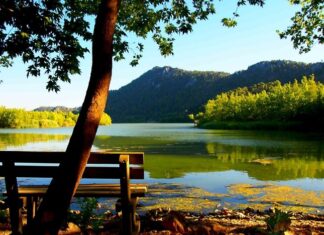
The lake is about two German miles in length and one mile in breadth. It is surrounded on all sides by hills that stand at some distance, forming a natural boundary around it. On the southern side lies a large forest, which is part of a wide and extended woodland region.
This forest stretches a great way and is full of wild animals, including deer, wild boars, foxes, wolves, and even bears. The presence of such animals shows that the region is still very natural and not greatly disturbed by human activity. The scenery around the lake is both beautiful and somewhat wild, giving it a special character unlike many other lakes in Europe.
The Strange Disappearance and Return of the Water
One of the most remarkable features of this lake is the yearly change in its water. Every year, usually in some part of the month of June, the water of the lake descends underground through many large holes at the bottom. This happens gradually but clearly, until great parts of the lakebed become dry.
Then, in the month of September, the water returns again through the same holes. It rises quickly, springing upward with force and sometimes reaching a height like that of a pike. In a short time, it covers the ground again and restores the lake to its former state. This natural event makes the lake very famous and curious to travellers and scholars alike.
Use of the Land When the Lake Dries
When the water disappears underground, the earth quickly produces fresh grass. This grass becomes good food for cattle, especially in the colder months. At the same time, many animals such as hares, deer, and wild boars come down from the surrounding country and forest to feed on the newly grown grass.
Because of this, the local people often take the opportunity to hunt these animals. Thus, the drying of the lake provides both pasture for livestock and hunting grounds for the inhabitants.
Fishing Rights and Local Customs
The lake also provides a great abundance of fish. However, fishing is not freely allowed at all times. It may only be done with permission, because the Prince of the region is the lord of the lake and of a large part of the surrounding country. His authority regulates how and when the fish may be taken.
When the water goes away, everyone is allowed to catch fish. The people do this by standing in the remaining water near the holes through which the water drains. In this way, they intercept the fish as they try to follow the water underground. By doing so, they take a great quantity of fish, which would otherwise disappear beneath the earth and not return until the water rises again in September. This custom shows how closely the people’s lives are connected with the unusual nature of the lake.